News

Jona Kayser, FAU researcher and junior group leader in the Biological Optomechanics Division at the Max Planck Institute for the Science of Light, came out on top in a selection process run by the German Research Foundation (DFG). The organisation will fund his research on the evolution of tumours with around 1.9 million euros in the coming years.

Nominations can be submitted until 4 pm on 5 May 2021. The University election for representatives for each of the University’s member groups the Senate, the Faculty Councils of the five faculties and the School of Theology’s Appointments Council (Berufungsrat) are to be held electronically in mid June.

Physicists at FAU have for the first time been able to prove a long-predicted but as yet unconfirmed fundamental effect. In Faraday chiral anisotropy, the propagation characteristics of light waves are changed simultaneously by the natural and magnetic-field induced material properties of the medium...

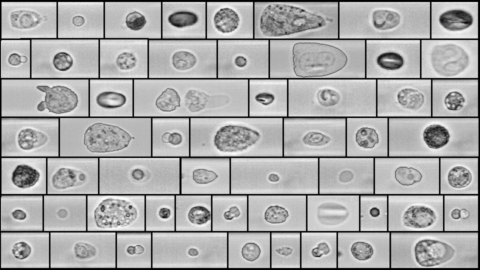
The mechanical properties of cells can reveal which diseases a patient is suffering from. Researchers at the Max-Planck-Zentrum für Physik und Medizin in Erlangen are taking advantage of this effect - and revolutionising diagnostics. Their goal: instead of costly examining blood samples in the laboratory, doctors should be able to analyse them quickly and reliably using AI-supported methods.

The Open Research Challenge 2020, organized by FAU, invited young researchers from around the world to submit innovative and creative ideas to remove incorrect and outdated entries in the largest database used in the field of palaeontology. The winning submission, code developed by a paleontologist from Bristol in the UK, offers a solution for cleaning paleontological data.


Materials scientist Prof. Dr. Carolin Körner receives ERC Advanced Grant worth three million euros. She will use the funding to drive forward research into additive manufacturing of high-performance components using high-energy electron beams over the next five years.

Sport scientist Dr. Dejan Reljic has shown for the first time that not only high-intensity interval training (HIIT), but also moderate-intensive interval training significantly improves the health of obese patients. This means that the interval training benefits health even at only moderate intensity.

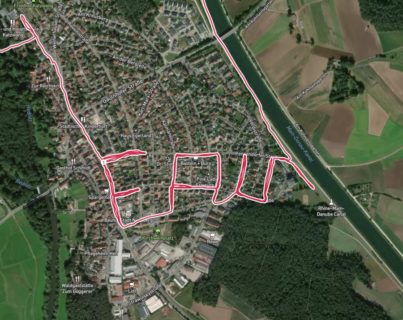
President Prof. Dr. Joachim Hornegger has set a GPS challenge via Twitter: Who can jog or walk the best version of the FAU logo? The first GPS screenshots are already online. This is how it works.

There are more than 70 Master's degree programmes to choose from at FAU and you can now apply for a place in winter semester 2021/2022. Applications are also open for international students in all undergraduate degree programmes and programmes without admission restrictions. Apply today – FAU, the largest university in Northern Bavaria, is looking forward to welcoming you!

Initial findings from a study involving hospital staff has indicated that nasal spray Carragelose® containing iota carrageenan– a natural ingredient from red algae – could protect against SARS CoV-2 infections. Several laboratory tests have already demonstrated the effect of Carragelose® against the coronavirus in cell experiments. With that in mind, this special nasal spray could support the general protective measures against SARS-CoV-2 and prevent infections.