News

FAU alumna Christine Bruchmann has been director of the Fürst Gruppe in Nuremberg since 2005, a broad-based service provider with just under 4,000 employees. In our alumni interview, she reminisces about her time at FAU and shares the values close to her heart as a businesswoman.

Feng shui from China, ritual magic in Germany, vodun in West Africa or kabbalah ma'asit in Israel: practices used to try and predict, control or manipulate future events can be found all over the world. An FAU research unit is to investigate and compare these esoteric practices in a large-scale interdisciplinary project that has received almost four million euros of funding from the German Research Foundation (DFG).


On 21 September, high-profile guests including Federal Minister of Health Jens Spahn and Bernd Montag, CEO of Siemens Healthineers, met for the second ‘Global Market Leaders Innovation Day’ to discuss how digitalisation can drive healthcare forward.

Since May 2021, doctors at the Department of Ophthalmology at Universitätsklinikum Erlangen have successfully treated four patients suffering long-term effects of a COVID infection. All four people suffering from severe Long COVID symptoms experienced a reduction in symptoms after receiving the cardiac drug BC 007. The Federal Ministry of Education and Research is now supporting further research at Universitätsklinikum Erlangen.

From October, Dr. Alison Mitchell and her Emmy Noether junior research group at the Erlangen Centre for Astroparticle Physics (ECAP) are to investigate the role pulsars play in creating galactic, high-energy cosmic rays. The project is set to run for six years, and has received nearly 1.5 million euros in funding.

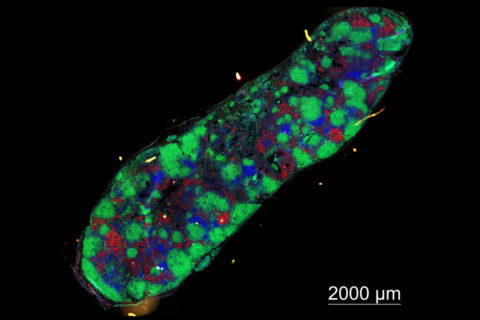
The diffuse symptoms at the early stage of complex autoimmune diseases make it hard to diagnose the condition early on, which in turn delays treatment. A team of researchers at FAU has now demonstrated that treatment can be extremely effective if autoimmune diseases are treated as early as possible, even before the first clinical symptoms appear.

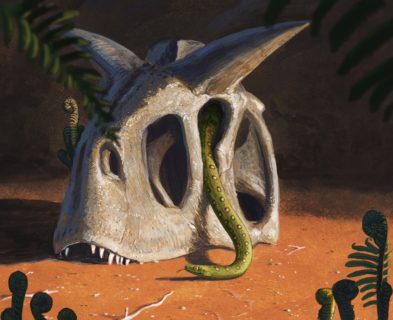
Snakes benefited from the mass extinction after the asteroid impact 66 million years ago. The asteroid impact wiped out 95 percent of all life on Earth, including the dinosaurs, and only a few species of snake survived. The lack of predators and their ability to survive for long periods without food helped snakes to spread to other continents and exploit new habitats, allowing a wide variety of new species to develop. The patterns seen in snakes show that natural disasters play a greater role in evolution than previously thought.

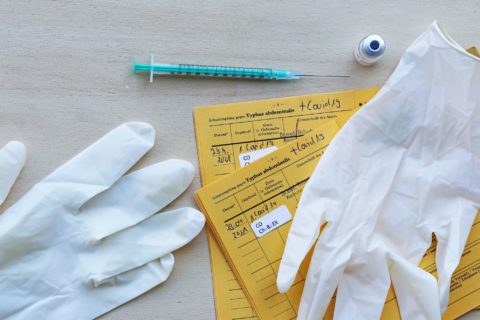
FAU is well on track for being able to offer face-to-face teaching in the winter semester, as the rate of vaccination among students at FAU is encouragingly high. For anyone who is still undecided, Prof. Bogdan will be available during a live chat to give information about the vaccination and answer any questions.