News

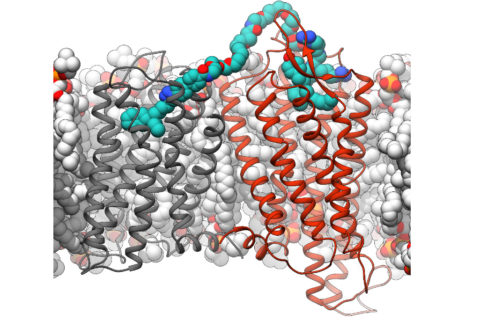
There are a number of G protein-coupled receptors in human cells. They may act individually or in pairs, and this can have an effect on their function. Scientists from FAU have investigated G protein-coupled receptors and carried out research into whether tailor-made substances can have an impact on how these receptors form pairs and how they then behave.

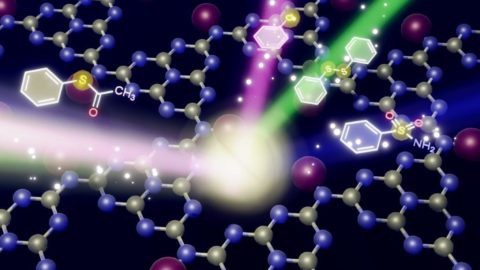
Chemical reactions can be controlled using coloured light by means of an intelligent photocatalyst developed by researchers at the Chair of Physical Chemistry at FAU and the Max Planck Institute of Colloids and Interfaces. The colour of the light determines which programmed chemical reactions are triggered by the photocatalyst. The researchers have now published their findings in the journal ‘Angewandte Chemie Int. Ed.’.

The results of the FAU-St student survey are a valuable quality management tool for teaching and studying. Examining the data collected over a period of several years is an interesting way to discover any trends and changes among the responses. With this in mind, we will be looking at the results of the FAU-St survey from 2016 to 2020 during the next few weeks, starting with the questions about satisfaction with degree programmes in general.

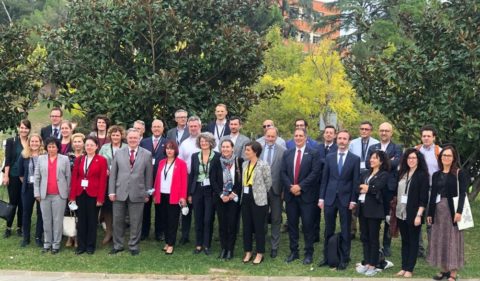
The aim of EELISA, the European Engineering Learning Innovation & Science Alliance, is to train a new generation of students across various countries to use intelligent technologies and sustainable solutions to tackle the current global challenges. FAU is one of the universities involved in the project.

FAU once more shows what it can do in the second and third subject groups in the Times Higher Education (THE) ranking. The second ranking group focuses on engineering and computer science, and the third on subjects including social sciences.

FAU shows what it can do in the Times Higher Education (THE) subject rankings: In three of the four groups of subjects – Clinical and Health, Life Sciences, Physical Sciences and Psychology – the University’s performance has significantly improved on an international level.

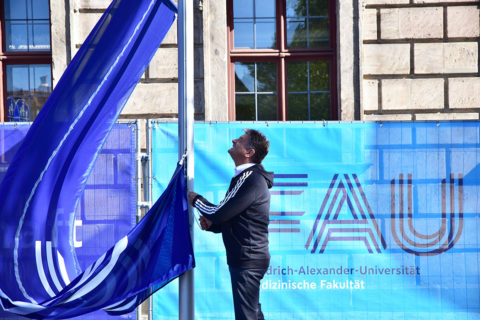
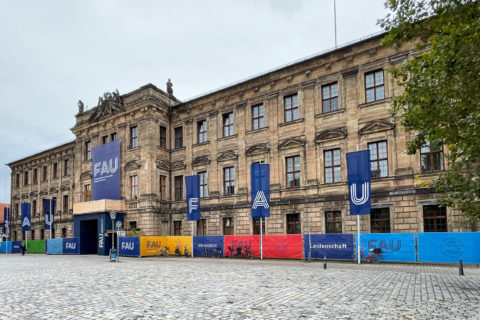
‘Moving knowledge’ – with innovation, diversity and passion – is the motto and the idea behind everything we do and the driving force behind our future development. Symbolically, FAU marked the occasion by raising flags with the new corporate design on 1 October at our campus locations in Erlangen and Nuremberg.

Efficient battery systems are used in cars, tools, bicycles and as stationary energy storage units. Reusing these batteries, however, is difficult and not economically viable. By using a battery pass, researchers at FAU aim to store information for recycling directly in the battery itself. The research project has received over 4.5 million euros of funding from the Federal Ministry of Education and Research (BMBF).
After having 240.6 million euros in funding approved by the German Research Foundation (DFG), FAU is ranked as one of the ten leading research universities in Germany in the current Funding Atlas 2021 from the German Research Foundation. The humanities and social sciences, natural sciences and life sciences have improved most significantly. Traditionally strong: engineering.

Setting the ball rolling for construction works: Budget committee of the Bavarian state parliament approves the construction plans for the new Technical Chemistry building at FAU. The University can now continue with planning a new, modern teaching and research building on the FAU campus (south) in Erlangen to house the Chair of Chemical Reaction Engineering, Chair of Thermal Process Engineering and the Erlangen Catalysis Resource Centre.