News

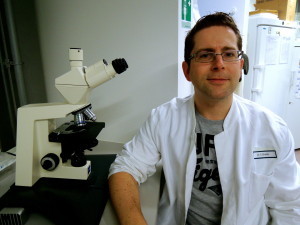
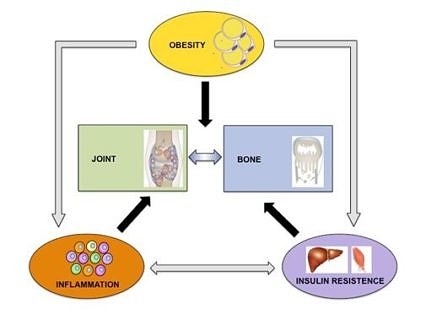
METARTHROS, an interdisciplinary research consortium funded by the Federal Ministry for Education and Research and led by Prof. Dr. Georg Schett focuses on the connections between musculoskeletal diseases such as arthritis and metabolic disorders such as diabetes and obesity.

International study allows forecast of climate-caused migration of animals and plants Where do animals and plants have to go to adapt to the new conditions brought by climate change? A team of scientists including FAU researchers has confronted this question. They examined the patterns of tem...

Physicists reconstruct how wrinkly skin returns to smooth using a computer model We all know the phenomenon of wrinkly fingers after a bath. If we spend longer periods in the water, our skin absorbs moisture and the cells of the outer skin layer begin to swell. Once in a dry environment, the ...

Due to its causes, there is currently no treatment for hereditary spastic paraplegia. The Junior Research Group III of the Interdisciplinary Centre for Clinical Research has taken an important step towards changing this with the help of a Thom Wahlig Foundation scholarship for hereditary spastic paraplegia.

In science fiction films, they are already taking over the world from humans – in the reality of the 21st century, they could at least come as far as being useful helpers: humanoid robots are expected to conquer more and more aspects of daily life and to take over tasks for humans.

What makes football fans loyal to their club and how do they see the increasing globalisation of the football industry? Daniel Maderer of FAU's Department of International Management examines this in his latest study. The first results have been published recently.

Degenerate B-cells, so-called malignant lymphomas, are the chameleons among the body's cells. They can change their appearance and turn into other cell types known as macrophages or phagocytes. This sounds fascinating, but it can become a big disadvantage for patients.

How did black holes form and how did they shape the universe? How did large structures form from regular matter as we see it today?

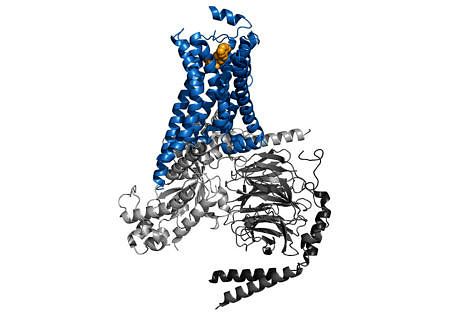
About 800 different G-protein coupled receptors (GPCRs) are known in the human body. A large part of that number is made up of adhesion GPCRs, which are responsible for proper brain development and inhibiting the growth of metastases and melanoma.

Scientists at FAU demonstrate the unique relaxation of stress in bilayer graphene Regardless of whether coming from an internal or external source, high pressure often leads to a state of stress. This not only applies to us humans, but also to materials. Stress in a material is manifested as ...