News

Thanks to modern medicine, it is now possible to calculate the likelihood of a person suffering from a certain disease during their lifetime. But does a certain likelihood mean that a person is already considered ill, even if the disease has not developed yet?

It could be difficult for the NSA to hack encrypted messages in the future – at least if a technology being investigated by scientists at the Max Planck Institute for the Science of Light in Erlangen and the Friedrich-Alexander University Erlangen-Nürnberg will be successful: quantum cryptography.

A Max Planck centre for physics and medicine, which combines fundamental research in mathematics and physics with clinical research, will be set up in Erlangen by the Max Planck Institute for the Science of Light (MPL), FAU and Universitätsklinikum Erlangen.

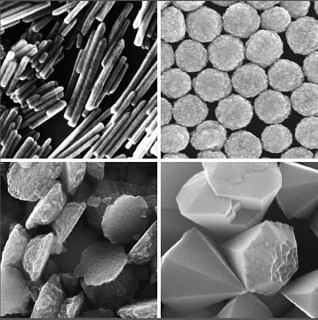
For several years, researchers have been experimenting with developing their own nanoparticles. However, the effects these artificial particles have if they enter the human body are still largely unknown. An interdisciplinary team of researchers at FAU recently began studying these effects.

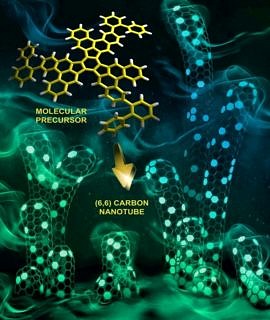
Carbon nanotubes are light yet stronger than steel, as a semiconductor they are more efficient than silicon, and they conduct electricity better than copper. For the first time, a team of international researchers, some of whom are based at FAU, have grown single-walled carbon nanotubes in a targeted way.


Cortisone is a powerful treatment in brain tumour therapy – although studies by FAU researchers have indicated the need for caution in using this medication in therapy. Neuro-oncologist Dr. Nicolai Savaskan and his team have found that cortisone can accelerate the growth of tumour cells.

Electric cars could bring Germany one step closer to achieving the planned energy reform, but so far they have not managed to penetrate the market. Computer scientists at FAU are carrying out research into how to make the changeover on the roads successful.