News

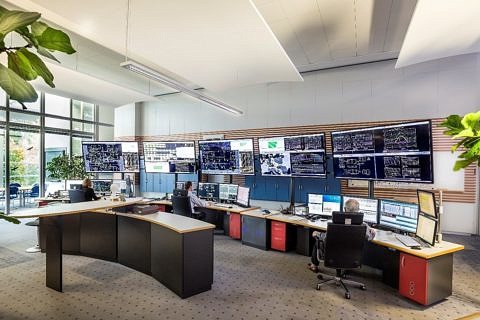
How can digitalisation help to improve the efficiency of the electricity grid, whilst making it more stable at the same time? These are the questions being considered by ‘InnoSys 2030’, a joint project involving FAU funded with approximately 10 million euros by the Federal Ministry for Economic Affairs and Energy.

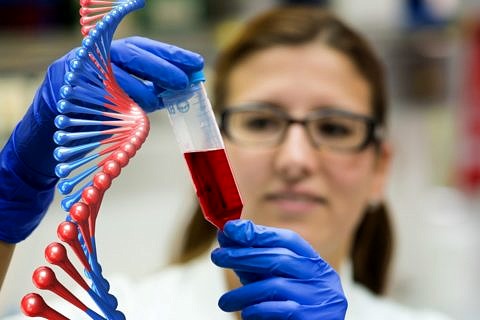
Research network searching for minute tumour markers in the bloodstream, in order to detect cancer earlier – a total of 1.3 million euros awarded in BMBF funding.

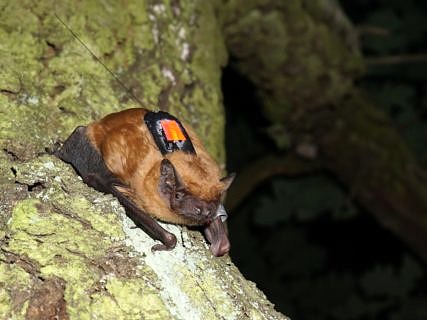
Biologists are using miniaturised tracking sensors to investigate maternal care in bat colonies. Scientists fitted mother bats and their offspring with sensors to automatically record contacts between the animals.

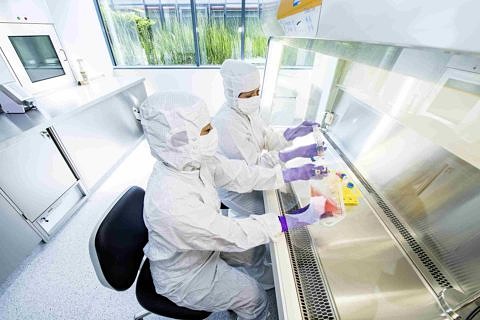
The first clinical trial in Germany with a new approach in cancer immune therapy is now under way at Universitätsklinikum Erlangen. The new T cell receptor therapy can provide vital support to the immune system in the fight against certain types of leukaemia and lymphoma.

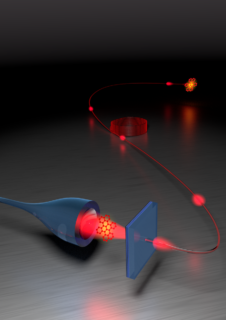
Physicists at the Max Planck Institute for the Science of Light and at FAU have succeeded in turning an organic molecule into a nearly ideal quantum system with only two well-defined energy levels. The experiments reported in Nature Physics set an important step because they demonstrate some basic building blocks for quantum networks based on organic materials.

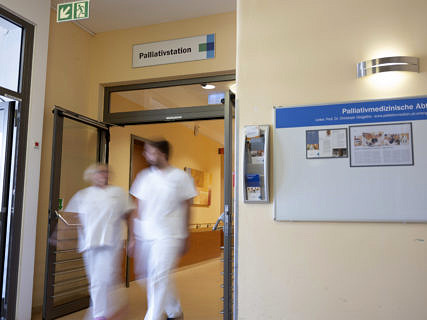
Death is an unavoidable aspect of research into life. Those involved in palliative care at FAU try to find ways of helping those nearing the end of their lives live their last months, weeks and days free from fear and pain. In doing so, they come up against legal constraints

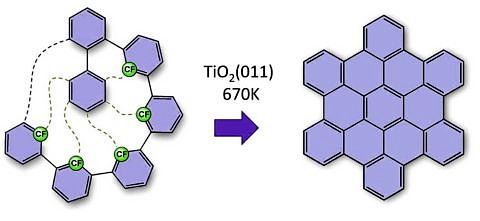
Nanostructures based on carbon are promising materials for nanoelectronics. However, to be suitable, they would often need to be formed on non-metallic surfaces, which has been a challenge – up to now. Researchers at FAU have found a method of forming nanographenes on metal oxide surfaces.

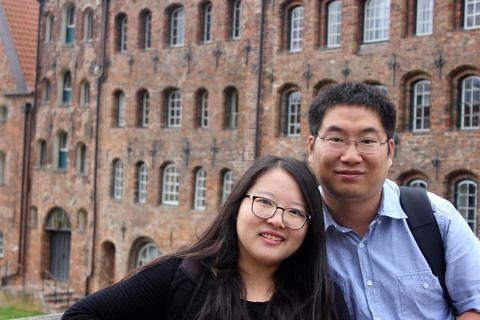
In 2016, Dr. Xi Wang completed his PhD in Mechanical Electronic Engineering at Xidian University, Xi’an, China. Dr. Wang has been awarded a 24-month Humboldt Research Fellowship to work on his research in FAU, supervised by Prof. Thomas Moor, as a Postdoctoral Researcher during February 2018 and January 2020.