News

Since 2016, Dr. Ezzat El-Sherif is Group Leader at the Division of Developmental Biology at FAU´s Department of Biology, where he works on gene regulation during embryonic development. In an interview, he gives an insight into his fascinating research at FAU.

Would singers know whether they are singing low or high notes, or singing loudly or quietly, even if they can’t hear their own voice? This is what FAU speech and language therapist Dr. Anke Ziethe is investigating in a new research project.

The Interdisciplinary Centre Gender – Difference – Diversity at FAU carries out research into the diversity of images people have of themselves and others.

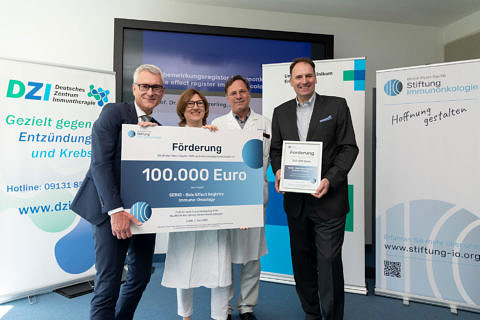
‘Immuno-oncology has revolutionised cancer treatment,’ says Prof. Dr Lucie Heinzerling, attending physician at the Department of Dermatology, Universitätsklinikum Erlangen. ‘However, we currently don’t know enough about the side effects of new cancer therapies and we are hoping to change this through a new online database.’

On 21 June 2019, a Proton M rocket will be launched from Baikonur Cosmodrome to transport the eROSITA X-ray telescope on board the SRG satellite into space. Know-how provided by a team of FAU researchers under the leadership of Prof. Dr. Jörn Wilms is supporting the telescope’s mission.

Are you and your family are new to the region and you don’t have any childcare yet? Do you have to give a presentation in the evening at the University and you don’t have a babysitter? Or do the school holidays coincide with the lecture period? Balancing the demands of work, research, study and family life is not easy. It’s good to know there’s a place FAU members can turn to in such situations – the Family Service.

Always-on connectivity, information overload and new technology that has become part of our lives and that we now depend on. In this emerging digital world, researchers at Friedrich-Alexander-Universität Erlangen-Nürnberg (FAU) and universities in Augsburg, Bamberg, Munich and Würzburg are investigating ways that we can interact with this technology that are beneficial rather than damaging to our health.

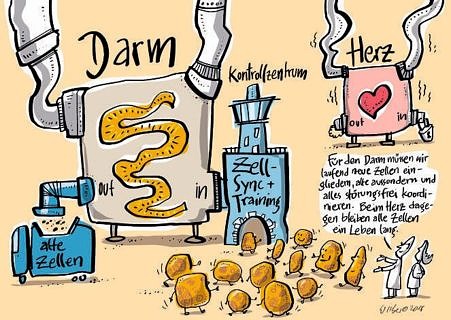
As the smallest living unit, a cell can survive alone, but not in a cluster. When the oldest known human being died at the age of 122, some cells in her body had reached the same age, others were replaced after just 60 hours. And yet they all behaved according to plan.

Humans have been over-exploiting the planet. The result – fossil resources are running out. Scientists at FAU are researching into alternatives.