News

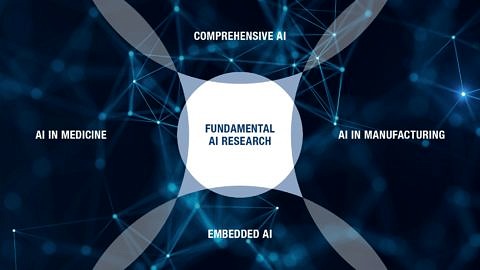
Deep learning involves machines learning using neural networks. However, they have to learn from scratch each time they are used in a different area. Researchers at FAU have now found a way of accelerating these learning processes by implementing prior knowledge in the networks without the need for time-consuming learning processes.

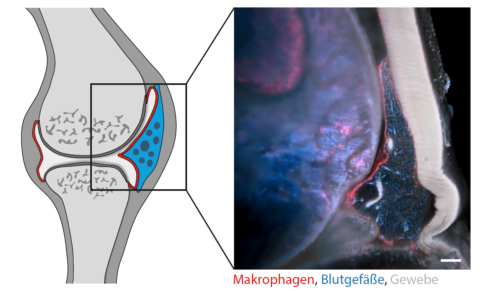
We still do not know exactly what causes chronic inflammatory joint diseases such as rheumatoid arthritis. A team at Universitätsklinikum Erlangen and FAU led by Prof. Gerhard Krönke has now chosen a new approach to gain a better understanding of the underlying mechanisms.

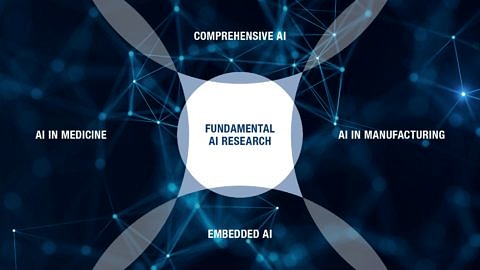
Prof. Dr. Björn Eskofier, Chair for Machine Learning and Data Analytics about AI in medicine and what is necessary to push this field further: a strong artificial intelligence and medicine center.

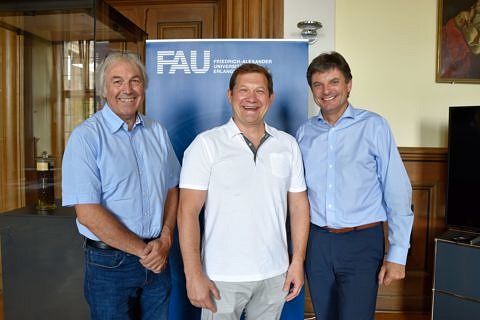
FAU welcomes another Humboldt award winner to its midst: Biochemist Prof. Dr. Maxim Berezovski from the University of Ottawa has received the Friedrich Wilhelm Bessel Research Award from the Alexander von Humboldt Foundation and is using the award to continue his research on so-called ‘synthetic antibodies’ at FAU.

Inelastic collapse refers to a process in which there is an infinite number of collisions between particles in a finite time without any input from external influences. The particles form a cluster, in other words they are in permanent contact with each other. Up until now, it was believed that this scenario required two prerequisites to be met: Researchers at FAU have now successfully proven a further scenario.

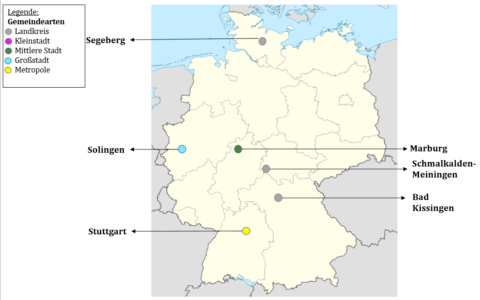
The GKV-Bündnis für Gesundheit (the Alliance for Health of German statutory health insurance providers) and the Department of Sport Science and Sport (DSS) at Friedrich-Alexander-Universität Erlangen-Nürnberg (FAU) have launched a project, KOMBINE, aimed at implementing national guidelines for physical activity and promoting physical activity. Six model local authorities have been selected to test the project.