News

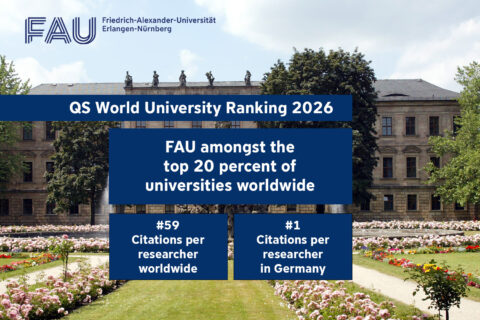
FAU belongs to the top 20 percent of universities worldwide according to the latest QS World University Ranking. FAU thus stays at the same level as last year and ranks at place 232 of 1501 universities.

The application phase for the FAU Deutschlandstipendium scholarship started on June 15, 2025. This is a great opportunity to get financial support and valuable networking opportunities. Scholarship holders receive 300 euros a month for one year. Students with average grades of at least 2.0 can apply until July 15, 2025.

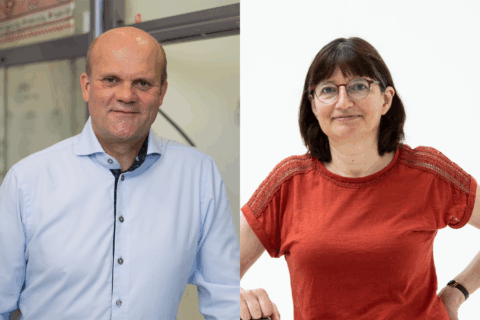
Further proof of the strength of FAU as a location for cutting-edge research: Physicist Prof. Dr. Maria Chekhova and chemist Prof. Dr. Sjoerd Harder have each been awarded one of the coveted ERC Advanced Grants. The grants raise funding of around 2.5 million euros each for five years.

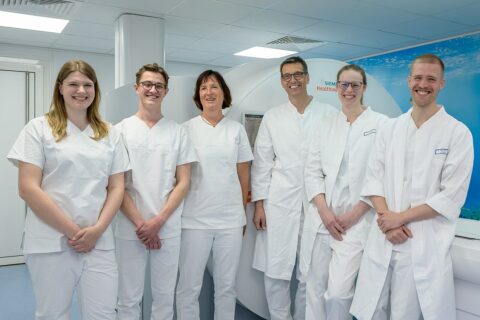
The winners of the German Future Prize 2023, Prof. Dr. Michael Uder, University Hospital Erlangen, Dr. Stephan Biber and Dr. David Grodzki, both from Siemens Healthineers, have donated their prize money of 250,000 euros to purchase a model of the MRI they developed and won. This will now be used in Peru.
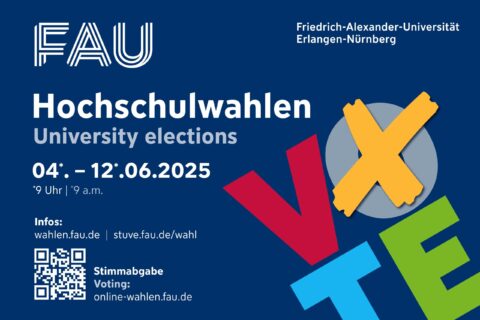
FAU has voted! From June 4 until June 12, all FAU members were able to cast their vote in the University election easily with just a few clicks on the FAU election portal. Here are the results.

At the FAU Music Festival, you'll enjoy two student bands and two headliners, all as part of a big joint party – both outside in the garden and indoors in the hall – for students, alumni, staff, and friends of FAU. Tickets are available on Reservix.

Finally, summer! The FAU Shop offers a variety of cool products for hot summer days – many in collaboration with FAU partner adidas. With the flip-flops, the large beach towel, and the lightweight sports tote bag, you'll be perfectly equipped for warm days at the university, by the lake, or on a weekend trip. All products are available at fau-shop.de.

The German Research Foundation (DFG) is funding a new research training group at FAU that is investigating modern functional materials and thus making a major contribution to their efficient use in sustainable technologies such as photovoltaics, batteries and hydrogen.

In future, the production of bioactive molecules and drugs could do without external enzyme or metal catalysts. Chemists at FAU have developed a process in which an organoautocatalyst formed in situ enables the chemical synthesis of bioactive cyclic amine compounds with high efficiency under mild conditions.